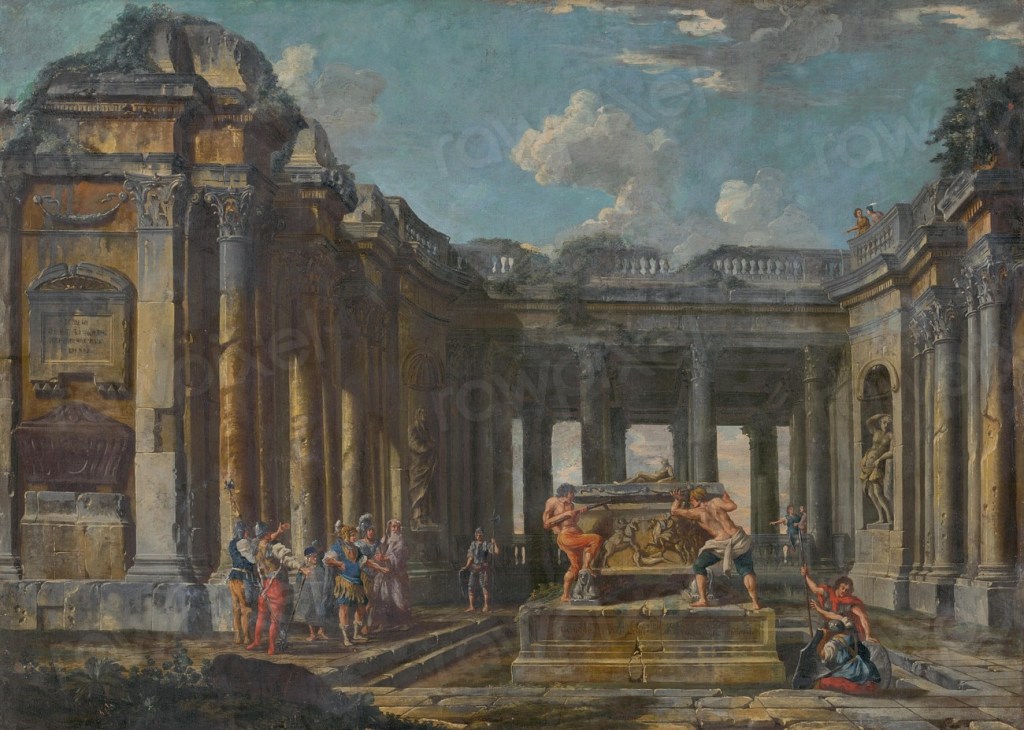
In 193 AD, an extraordinary event took place in the history of the Roman Empire: the accession to the throne of Didius Julianus through a public auction. This event unfolded against the backdrop of the assassination of Emperor Pertinax by the Praetorian Guard, the elite unit of imperial bodyguards. Following this, a power vacuum emerged, leading to the unique and historic auction for the Roman throne.
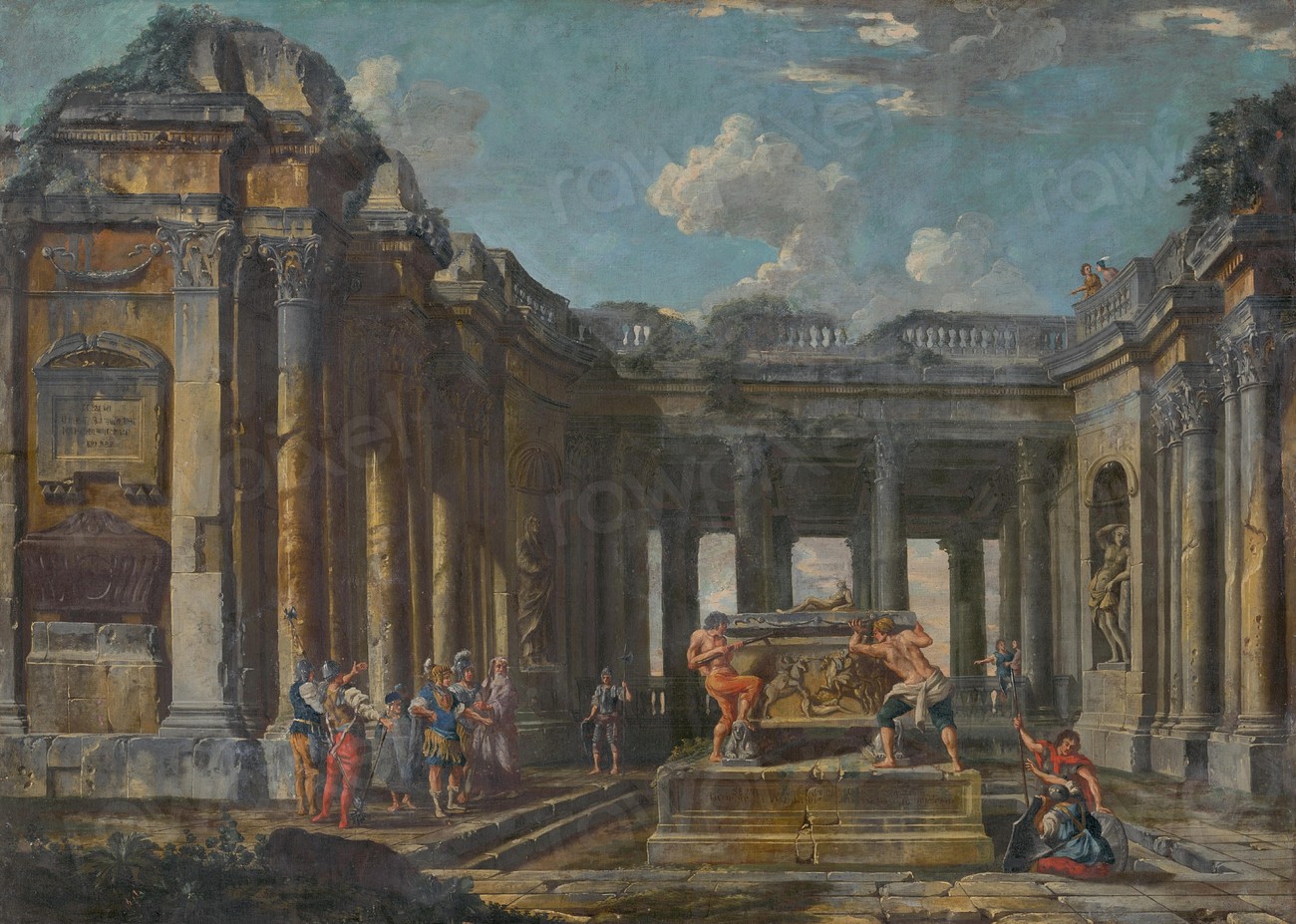
Didius Julianus, a senator of considerable wealth and influence, became the central figure of this event. Raised in the household of the Antonines and connected to Emperor Marcus Aurelius, Julianus had a notable military and political career. His aristocratic background and his achievements in various roles across the empire shaped his journey to this pivotal moment.
The auction was the result of the Praetorian Guard’s decision to offer the throne to the highest bidder, following their dissatisfaction with Pertinax. Didius Julianus and Titus Flavius Sulpicianus, Pertinax’s father-in-law, were the main contenders in this auction. The bidding was conducted openly, with each trying to outdo the other.
Ultimately, Julianus outbid Sulpicianus by offering 6250 drachmas per soldier, a bid that secured him the support of the Praetorian Guard and the title of Emperor. This decisive action demonstrated Julianus’s determination and the value he placed on ascending to the highest office in the Roman Empire.
However, Julianus’s reign as Emperor was short-lived. His rule faced significant challenges, including opposition from the Roman Senate and the general populace. After just 66 days as Emperor, he was condemned and executed by the Roman Senate.
The accession of Didius Julianus to the Roman throne through an auction was a unique episode in Roman history. It showcased the complexities of Roman politics and the varying paths to power in the Roman Empire. Julianus’s story, from his aristocratic upbringing to his brief rule, is a fascinating glimpse into the political dynamics of ancient Rome.


 All About Auctioneers
Leave a comment